

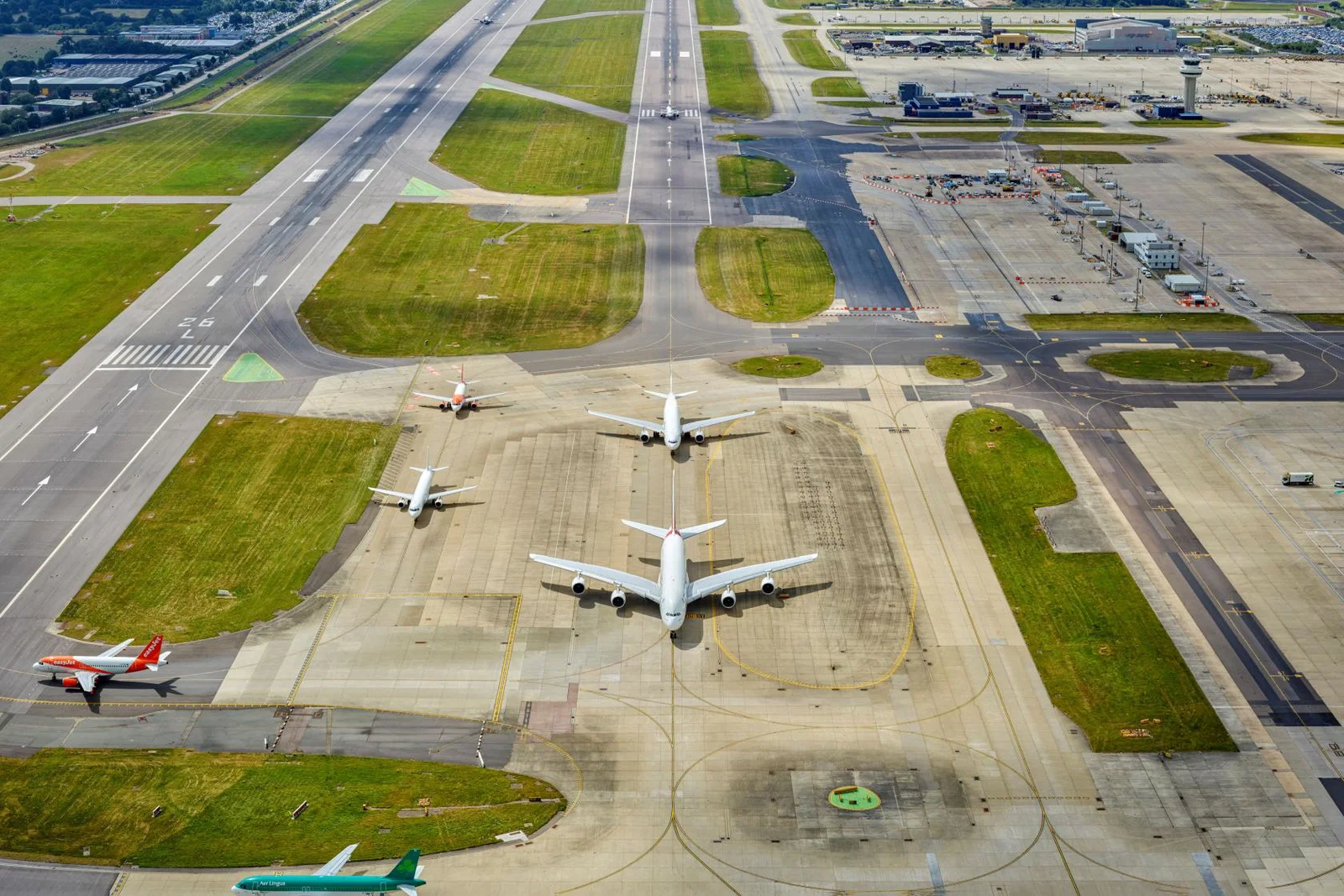
The latest Gatwick expansion ruling is an important moment for one of the South East’s biggest transport projects. Campaigners challenging the government’s approval of Gatwick Airport’s Northern Runway plan have lost two High Court challenges, according to the BBC, while opponents have indicated they may seek to appeal.
The decision does not mean diggers immediately move in without any further process, and it does not settle every practical, environmental or community question around the project. It does, however, mean the court has upheld the lawfulness of the government’s approval for a scheme that Gatwick says could increase capacity, support jobs and add to the regional economy.
For readers in London and Kent, the case matters because Gatwick is a major airport for leisure and business travel across the capital and the wider South East. Changes to runway capacity could affect route choices, airport congestion, employment and local transport patterns. They could also intensify long-running concerns about aircraft noise, climate impact and development pressure near the airport.
What has happened in the Gatwick expansion ruling?
The High Court has ruled that the UK government’s approval for Gatwick Airport’s expansion was lawful, according to reports cited in the supplied source material. The BBC reported that campaigners opposing the airport’s expansion lost two High Court challenges against the £2.2 billion plan to use the airport’s emergency runway for regular operations.
The challenge concerned approval for Gatwick’s Northern Runway project. The BBC said judges supported Transport Secretary Heidi Alexander’s decision and ruled it aligned with the government’s net zero targets. Opponents have argued that the project raises climate and noise concerns and have indicated they may appeal.
In practical terms, the ruling is a legal decision about whether the approval process and decision were lawful. It is not the same thing as a broad public vote on whether airport expansion is desirable, nor does it remove the need for the project to comply with the conditions and processes attached to its planning approval.
What is Gatwick proposing?
Gatwick’s own project information states that the Northern Runway is currently used as a taxiway. The airport says the plan is to reposition it to enable dual-runway operations while meeting safety standards.
The airport puts the cost of the project at £2.2 billion. It says the scheme is intended to unlock capacity, allow the airport to serve up to 80 million passengers a year, create around 14,000 jobs and contribute £1 billion annually to the regional economy.
| Issue | What the supplied sources say |
|---|---|
| Project | Repositioning Gatwick’s Northern Runway, currently used as a taxiway, to allow dual runway operations. |
| Estimated cost | Gatwick and the BBC describe the project as a £2.2 billion plan. |
| Passenger capacity | Gatwick says the project could allow the airport to serve up to 80 million passengers annually. |
| Jobs and economy | Gatwick says the project could create around 14,000 jobs and contribute £1 billion annually to the regional economy. |
| Planning status | Gatwick says the Development Consent Order was submitted in July 2023, accepted for examination in August 2023, examined by August 2024, and granted final approval by the Secretary of State for Transport in September 2025. |
Why Gatwick matters for London and Kent travellers
Gatwick is a major airport serving London, Kent, Sussex, Surrey and the wider South East. For many passengers in south London and west Kent, it can be the closest large airport for short-haul flights, long-haul services, package holidays and business travel.
If the Northern Runway project increases capacity as Gatwick expects, supporters would argue that travellers could benefit from more airport capacity in the region. In general terms, additional runway capacity can give an airport more room to schedule flights. However, the sources provided do not detail specific new routes, airline commitments, or fare effects.
That distinction matters. The ruling supports the lawfulness of the approval; it does not, by itself, guarantee particular destinations, cheaper tickets, or shorter queues. Those outcomes would depend on later operational decisions by the airport, airlines and regulators, and on wider demand for air travel.
Business and employment arguments
The central business case put forward by Gatwick is that the Northern Runway project would increase airport capacity and support the regional economy. Gatwick says the scheme could create around 14,000 jobs and contribute £1 billion annually to the regional economy.
For London and Kent, the employment argument is not only about jobs inside the airport terminal. Airports support a wide range of activities, including airlines, ground handling, hospitality, logistics, retail, maintenance, and local transport. Businesses that rely on connectivity may also welcome increased aviation capacity in the South East.
However, the supplied sources do not break down where those jobs would be located, what types of roles they would be, or how many would be permanent rather than linked to construction and delivery. A careful reading, therefore, treats the headline employment figure as Gatwick’s stated projection, not as a guaranteed local jobs outcome for any particular borough, town or district.
Noise and community concerns
Noise is one of the most sensitive issues in any runway expansion debate. Communities under or near flight paths can be affected by aircraft noise, particularly during early morning, late evening or busy travel periods. The BBC reported that campaigners continue to cite noise pollution as one of their concerns.
Gatwick says its project has included public consultation and an environmental noise assessment, including a dedicated viewer tool. That suggests noise modelling and community information are part of the project documentation. However, the supplied sources do not provide the detailed results for individual places in London, Kent or Sussex.
For people living in affected areas, the key questions are likely to be practical: whether flight paths change, whether the frequency of aircraft overhead increases, how night-time or early-morning disturbance is managed, and what mitigation is required. Those details should be checked against the official planning documents and airport materials rather than assumed from the headline ruling alone.
Environmental and climate arguments
Environmental campaigners have opposed the expansion, citing climate impact, noise and pollution concerns. The BBC reported that campaigners argue the expansion contradicts environmental recommendations, while the High Court ruling upheld the government’s approval and found it aligned with net-zero targets.
The source material also states that the court echoed the government’s position that sustainable aviation fuel was relevant to net-zero targets. However, the supplied sources do not provide the full legal reasoning, the detailed carbon assessment, or the planning conditions attached to the project. For that reason, it is important not to overstate what the ruling proves. It means the approval was found lawful; it does not end the wider policy debate over aviation growth and emissions.
Supporters of airport expansion commonly emphasise economic growth, passenger demand and infrastructure capacity. Critics commonly point to emissions, local air quality, noise and the risk that growth in flights could make climate goals harder to meet. The Gatwick case brings all of those arguments into a regional context for London and the South East.
What happens next?
The next stages depend partly on whether campaigners can pursue an appeal and partly on how Gatwick proceeds with delivery under the planning consent. The BBC reported that campaigners have said they intend to appeal after losing their High Court challenges.
Gatwick’s project page says the Development Consent Order process has already moved through submission, examination and final approval. In major infrastructure projects, a Development Consent Order is the main planning consent route for nationally significant schemes. The supplied sources do not set out a construction timetable, opening date, route plan, or detailed works schedule that can be treated as confirmed for readers.
Residents, passengers and businesses should therefore expect more attention on the practical delivery stage: conditions attached to consent, environmental mitigation, consultation updates, construction planning, and any further legal steps.
Why this matters
The Gatwick expansion ruling matters because it sits at the junction of several everyday issues for the South East: how easily people can travel, how local economies grow, how jobs are created, and how communities manage the environmental effects of major infrastructure.
For London passengers, extra capacity at Gatwick could affect future travel options, although specific effects on routes or prices are not confirmed in the supplied sources. For Kent residents, the significance may be felt through access to the airport, employment links and potential aircraft noise depending on location and flight patterns. For businesses, the project is part of a wider debate about the South East’s transport capacity and international connectivity.
The ruling is therefore best understood as a significant legal and planning milestone, not the final word on every aspect of the scheme’s impact.
Frequently Asked Questions
What was the Gatwick expansion ruling?
The High Court ruled that the UK government’s approval for Gatwick Airport’s Northern Runway expansion was lawful. The BBC reported that campaigners lost two High Court challenges and may seek to appeal.
What expansion is proposed at Gatwick Airport?
Gatwick proposes repositioning its Northern Runway, currently used as a taxiway, to enable dual-runway operations. The airport says the £2.2 billion project could allow up to 80 million passengers a year.
Could the ruling mean more flights for London and Kent passengers?
The project is intended to increase runway capacity, but the sources provided do not confirm any specific new routes, airlines, or fares. Any passenger effects would depend on later operational and commercial decisions.
What are the main jobs and business claims?
Gatwick says the Northern Runway project could create around 14,000 jobs and contribute £1 billion annually to the regional economy. The supplied sources do not provide a detailed local breakdown of those jobs.
What are campaigners concerned about?
Campaigners have cited climate impacts, noise pollution, and broader environmental concerns. Gatwick says it has carried out consultation and environmental noise assessment work as part of the project process.