

Last checked against the supplied source material: 24 June 2026. Heatwave disruption can change quickly, so passengers and drivers should check live official updates before setting off.
Kent heatwave travel disruption is not just about uncomfortable journeys. When temperatures rise to extreme levels, rail operators, road organisations, and public services may need to change how they operate to reduce risk and keep essential movement going.
National and regional reporting says the Met Office has issued extreme heat warnings affecting southern England and wider areas, including the South East. Network Rail has warned that very high temperatures can cause rails to expand and, in some cases, buckle. That is why trains may run more slowly, services may be cancelled, and passengers may be told to travel only if their journey is essential.
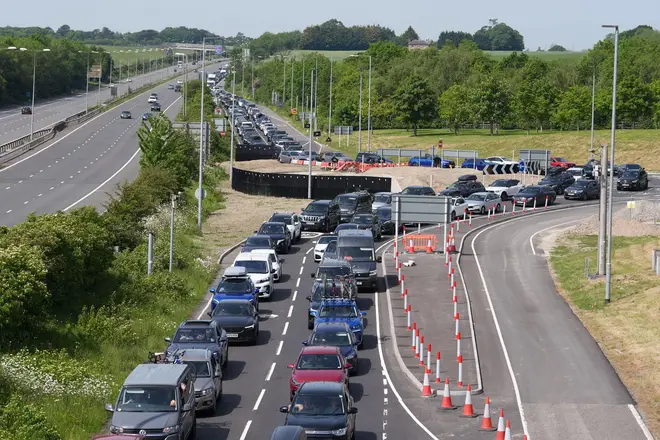
For Kent readers, the practical effect is straightforward: even if disruption is not visible at the start of a journey, services into London, across the South East or on longer-distance connections can be affected by restrictions elsewhere on the network. Roads can also become more difficult if vehicles overheat, breakdown demand rises, or road surfaces soften in exceptional heat.
What heat warnings are affecting Kent and the South East?
The supplied source material refers to Met Office extreme heat warnings for southern England and Wales, with reports that temperatures could reach 40 °C in affected areas. Rail industry reporting says red weather warnings covered areas including London, the South East, the East of England, the South West, Wales, the West Midlands and the East Midlands during the record heatwave period.
The sources do not provide a district-by-district Met Office warning list for Kent. That means this article should be read as a Kent-focused explainer based on wider official and transport warnings for the South East, not as a live confirmation that every Kent town or route is under the same level of warning at the time you read it.
Before travelling, Kent passengers should check the current Met Office warning page and live operator information. Warning areas, timings and severity can change as forecasts are updated.
Why this matters for Kent journeys
Kent has many everyday journeys that link into wider South East travel patterns: commuters heading towards London, families travelling between towns, coastal journeys, and connections using main roads and rail services. Heat-related restrictions on one part of the network can have knock-on effects elsewhere.
That does not mean every Kent route will be disrupted. It does mean passengers should be cautious about assuming that a normal timetable will run as planned during an extreme heat warning. A train can be delayed by speed limits miles away, and a road journey can take longer if breakdowns, congestion or surface issues build up during the hottest part of the day.
Why extreme heat can disrupt trains
Rails are made of steel. Steel expands when it gets hot. Railways are designed to cope with normal seasonal temperature changes, but extreme heat can push infrastructure closer to its limits.
When rails become very hot, they can expand. If the track cannot safely accommodate that expansion, there is a risk of the rail becoming misaligned. This is often described as rail buckling. A buckled rail is a serious infrastructure problem, so operators try to reduce the risk before it happens.
One way to do that is by imposing speed restrictions. Slower trains put less stress on the track and give drivers more time to respond. The trade-off is that journeys take longer. Once trains are running more slowly, timetables can become harder to maintain. Delays can build up throughout the day, and some services may be cancelled to prevent the network from becoming more congested.
BBC reporting says Network Rail warned of significant delays and cancellations because speed restrictions are needed for safe train operation in extreme heat. Rail Business Daily also reported that trains in affected heat zones would run at reduced speeds, with delays and cancellations possible and replacement buses not always available.
What have rail passengers been told?
According to the supplied sources, Network Rail advised passengers in areas affected by the extreme heat warning to travel only if essential. The BBC reported that passengers in England and Wales were advised to avoid travel during the heatwave, with temperatures expected to reach 40 °C in some areas.
The Guardian reported similar advice, saying rail passengers were told to travel only if essential because of extreme heat warnings across southern England and Wales. It also reported that some operators were reducing services, with Chiltern Railways cancelling more than half of its services in the affected period.
Those examples are not Kent-specific service confirmations. They show the type of operational response that can happen during a severe heatwave: reduced speeds, amended timetables, cancellations and warnings that journeys may take much longer than usual.
What does this mean for the Kent train disruption?
For Kent passengers, the most important point is to check the route they actually plan to use. A general heat warning does not automatically mean every train from every Kent station is cancelled. Equally, a station looking quiet at one moment does not guarantee that later services will run normally.
Heat-related railway disruption may appear as:
- slower trains because of temporary speed restrictions;
- short-notice cancellations if services cannot be run reliably;
- longer waits at stations;
- changes to connections into London or across the South East;
- crowding if a reduced timetable leaves fewer trains available;
- limited or unavailable replacement transport, depending on the operator and location.
Passengers should use National Rail and the relevant train operator’s live service pages for current details. The supplied sources include national warnings from Network Rail and rail operators, but they do not include a live Kent route-by-route list.
How can extreme heat affect roads?
Road disruption during a heatwave can be less obvious than rail disruption, but it can still matter for Kent drivers, bus passengers and businesses.
AOL’s report, citing the RAC and AA, said motorists without efficient air conditioning were urged to postpone non-essential journeys during the severe heatwave. The RAC warned that high temperatures were likely to lead to increased breakdowns and longer waits for assistance. The AA warned that road surfaces may be affected by extreme heat and advised drivers to slow down on softened roads.
In plain English, very hot weather can put extra strain on vehicles. Engines, cooling systems, tyres and batteries may be more vulnerable during long or slow journeys. If more vehicles break down, recovery services can become busier, and congestion can worsen where vehicles stop in difficult places.
Road surfaces can also soften in exceptional heat. That does not mean every road will fail, but it is one reason why highway authorities and motoring organisations monitor conditions closely during periods of severe heat.
Public transport, schools and local services
The supplied source material confirms transport warnings for rail and road at the national or regional level. It does not provide confirmed closure notices for Kent County Council, Kent Highways, district councils, local bus operators, schools, or public buildings.
That distinction matters. Heat can affect schools, care settings, council buildings, and workplaces, particularly in buildings that are difficult to keep cool. Still, closures or altered hours should be treated as confirmed only when issued by the relevant school, council, operator, or organisation.
Parents and carers should therefore check their child’s school or academy trust directly, rather than relying on general heatwave reporting. Bus passengers should check the live information from their operator. Anyone attending a council appointment, health appointment, event or local business should check the venue’s own update if the journey is essential.
What has been reported without overstating local impact
The confirmed source-backed picture is that extreme heat warnings have led to national and regional travel advice, including warnings to avoid or limit rail travel in affected areas. Rail operators have warned of speed restrictions, delays and cancellations because rails can expand and buckle. Motoring organisations have warned of increased breakdown pressure and possible road surface issues.
What is not confirmed in the supplied sources is a specific list of Kent train cancellations, school closures, council service changes, local bus suspensions, port disruption or road closures caused by the heatwave. Those may exist on live official channels, but they are not contained in the source material supplied for this article.
For a local Kent reader, the safest editorial approach is to treat this as a check-before-you-travel explainer rather than a claim that every Kent service is disrupted.
Where Kent readers should check before travelling
| What you need to check | Where to look | Why it matters |
|---|---|---|
| Current heat warning | Met Office weather warnings | Warning colour, affected area and timing can change. |
| Rail services | National Rail and your train operator | Speed restrictions and cancellations can be added at short notice. |
| Road conditions | Official highways updates and motoring information | Breakdowns, congestion and surface issues can affect journey times. |
| Schools | Your school, academy trust or local authority channel | Any closure or early finish should come from the school or authority. |
| Local buses and public transport | Your bus operator’s service updates | Heat, traffic and staff availability can affect local services. |
| Appointments and venues | The organisation you are visiting | Opening hours or services may change during severe weather. |
Practical points for passengers and drivers
Transport operators and official bodies remain the best source of live advice. Based on the supplied reports, passengers in affected rail areas have been told to plan for longer journeys, dress for hot conditions, and carry water if they must travel.
Drivers should check their vehicle, route and destination before leaving, especially if travelling during the hottest part of the day or in a vehicle without efficient air conditioning. Motoring organisations cited in the supplied sources warned of increased demand for breakdowns and potential road-surface issues in extreme heat.
The main message for Kent is simple: check just before you leave, and check again if your journey depends on a connection, a return service or a fixed appointment.
Frequently Asked Questions
Does the current heat warning definitely cover Kent?
The supplied sources refer to extreme heat warnings across southern England, including the South East, but they do not provide a district-by-district warning list for Kent. Readers should check the current Met Office warning map for the live Kent position.
Why do trains slow down in a heatwave?
Network Rail warnings reported by the BBC and other outlets say extreme heat can cause rails to expand and potentially buckle. Speed restrictions reduce stress on the track but can lead to longer journeys, delays and cancellations.
Are Kent trains cancelled because of the heatwave?
The supplied sources confirm national and regional rail warnings, including possible cancellations and reduced speeds in affected heat zones. They do not provide a confirmed live list of Kent-specific cancellations, so passengers should check National Rail and their train operator before travelling.
Can hot weather damage roads?
Motoring organisations cited in the supplied reporting warned that extreme heat can contribute to road surface problems and more vehicle breakdowns. Drivers were urged to consider postponing non-essential journeys in vehicles without efficient air conditioning.
Where should I check for school closures or local service changes in Kent?
The supplied sources do not confirm Kent school closures or changes to council services. Parents, carers and service users should check directly with the school, academy trust, council, transport operator or venue for the latest official update.